
Foot Posture: The Missing Link for Training Longevity
Feb 05, 2026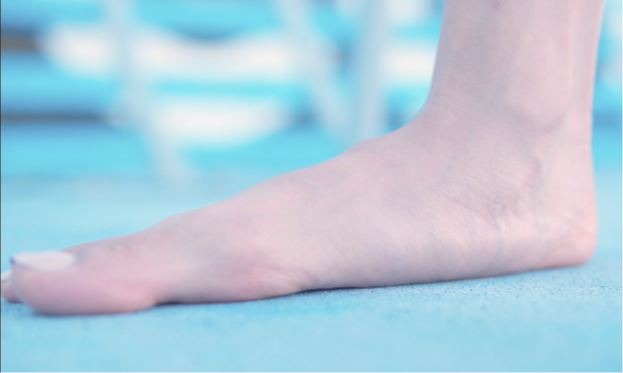
TL;DR
- - Some athletes train pain-free into their 40s. Others start breaking down in their 20s. In many cases the difference isn't genetics or training volume.
- - Research shows foot posture attributes to knee pain (57% higher odds), ankle pain (47% higher odds), and lower back issues—across all ages.
- - For athletes doing everything right (recovery, mobility work, etc.) but still hitting a plateau—foot posture might be the missing piece.
- - Low arch foot posture is trainable. Like forward head posture or rounded shoulders, it's a movement quality issue that can be improved.
There's a pattern that shows up over and over in joint health circles: athletes who do everything right but can't break past 70-80% recovery.
They've done the research-backed stuff. Slant board work, tibialis raises, mobility, all of it. They've dialed in sleep and recovery. Some have even dropped thousands on physical therapy and personal trainers. And it works, to a point. Pain goes down, function goes up. But there's a ceiling they keep hitting.
These aren't people who are slacking or ignoring their bodies. They're doing exactly what the best programs tell them to do. And yet, certain movements still cause that familiar twinge. Back-to-back training days still require careful planning. The question keeps coming up: why aren't these lower body issues fully going away?
The answer might be hiding in an area that almost nobody talks about—even in the good programs: foot posture.
What Do We Mean by Longevity?
Before we get into foot posture, let's talk about what "longevity" actually means here. You've heard the word thrown around in health and wellness circles—usually meaning living past 90. And sure, living longer is great. But what kind of shape do you want to be in while you're alive? What good is making it to 95 if you have chronic back pain, knee pain, and can barely walk?
That's why training longevity matters. When I say training longevity, I don't just mean avoiding injuries. I mean keeping the ability to do things. Being able to say yes to a spontaneous hike without worrying about your knees. Being able to train several days in a row without nursing some chronic issue.
It's the difference between "I used to run every day" and "I still run every day." Between "I had to stop squatting because of my knees" and "I'm still going hard in my 40s."
We know enough now about how the body works (biomechanics, movement, diet etc.) that we actually have a choice. We can use that knowledge to keep training for decades, degeneration doesn't have to be just a part of getting older anymore.
What People Are Already Doing
If you're reading this, you probably already know that training longevity is a thing people care about now. You've seen the shift away from pure bodybuilding toward joint health and movement quality. Programs like Knees Over Toes (ATG) and Squat University, where the focus is on strengthening tendons and improving mobility. Maybe you're already doing some of this: slant board work, tibialis raises, split squats etc..
You might also be locking in your recovery—prioritizing sleep, managing stress, eating for overall health instead of just looks. Maybe you're stretching, foam rolling, working on tissue quality. All of that is awesome. It's backed by research and it helps people train longer.
For me personally, ATG has been one of the best joint health programs I've ever done. And I say that with zero affiliation to them (at least at the time of writing this). I started tracking my own recovery, collecting data on what was working and what wasn't, and the ATG stuff moved the needle big time.
All of these things are making a real difference for people. But I almost never hear anyone talk about foot posture, even though it was one of the most important things I improved in my own recovery. In retrospect, it was probably what was holding me back the most.
What Is Foot Posture?
Foot posture is basically the shape and position of your foot when you're standing. There are three main types: normal arch, high arch, and low arch. I'm going to focus on low arch foot posture here because it's the most common problem.
Here's what it looks like: stand barefoot and look at your feet from the side. If there's little to no arch between your heel and the ball of your foot, that's a low arch. Your foot might roll inward a bit (people call this "pronation"), and the inside edge of your foot touches the ground more than it should. When you add weight to this—walking, running, squatting—it sets off a chain reaction up through your ankle, knee, and hip.
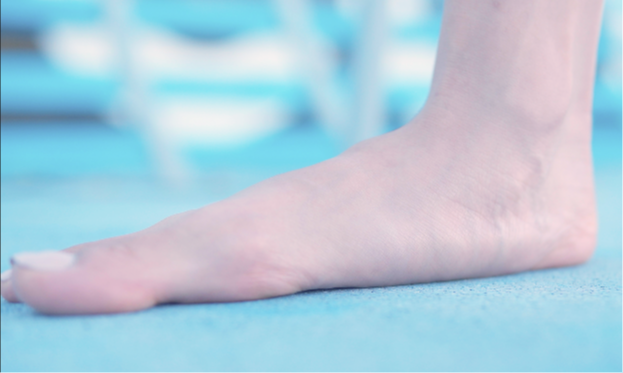
Now, you're probably thinking "isn't that just flat feet?" Not exactly. Low arch foot posture and flat feet (the medical diagnosis, called pes planus) overlap, but they're not the same thing. Here's the easy way to think about it: everyone with flat feet has low arch foot posture, but not everyone with low arch foot posture has flat feet. Low arch foot posture is a bigger category. It's more of a posture issue, like having rounded shoulders or your head jutting forward. It's about how you're standing, not necessarily a medical condition.
Why does that matter? Because posture is something you can train and improve in most cases. Just like you can improve slouching at your desk by sitting up strait, you can improve how you distribute your weight across your feet as well. I'll get into exactly how to assess it and what causes it in future posts, but for now just picture it as: your arch is too low when you stand.
Foot Posture, Exercise Longevity and The Science
Why care about the science
Being science-based is core to how I approach everything here. There's way too much misinformation in the fitness industry, and I have no interest in adding to it. I spent years in healthcare watching people sell stuff with big confident claims and zero data to back it up. So when I say something matters, I say that because of the research behind it.
Low arch foot posture being a problem isn't something made up. It's well-documented in the research to affect how your lower body moves as well as your joint longevity. Specifically: your knees, ankles, and lower back.
Foot posture and knees
The link between foot posture and knee problems has the most research behind it. And the way it works is pretty simple to understand: when your foot collapses inward while you're standing or moving, it causes a chain reaction up your leg. The low arch makes your shin bone rotate inward, which creates a problem with how your knee tracks during movement. Over time, that problem leads to chronic injuries in many cases.
What's important here is that research shows that this is happening across all age groups. College wrestlers, middle-aged adults, older people etc. This isn't just something that hits you when you're old. It's a pattern that can start causing joint problems relatively early on in life.
A 2017 study looked at the link between flat feet and knee pain in people with knee arthritis. Out of 95 people (ages 61-91), those who had flat feet in both feet reported almost double the knee pain compared to those without flat feet.
Another study looked at 165 people with flat feet, ages 20 to 72. The worse someone's foot arch collapse was, the worse their knee function and pain were. This is important because it wasn't just older people in the study. It included people in their 20s, 30s, and 40s who were already feeling the effects of their foot posture on their knees.
These studies show where things are headed if low arch foot posture goes unchecked. If you're in your 20s, 30s, or 40s and dealing with knee issues during training, your foot posture might be setting you up for a rough road.
And this isn't just an old-age problem. It shows up even in young people, especially in those who are athletes.
A study on freestyle wrestlers (average age 20) found a clear connection between flat feet, a change in knee angle called the Q-angle (that's the angle between your thigh bone and the tendon below your kneecap), and knee pain. Flat feet caused the Q-angle to be off, and that was directly tied to knee pain.
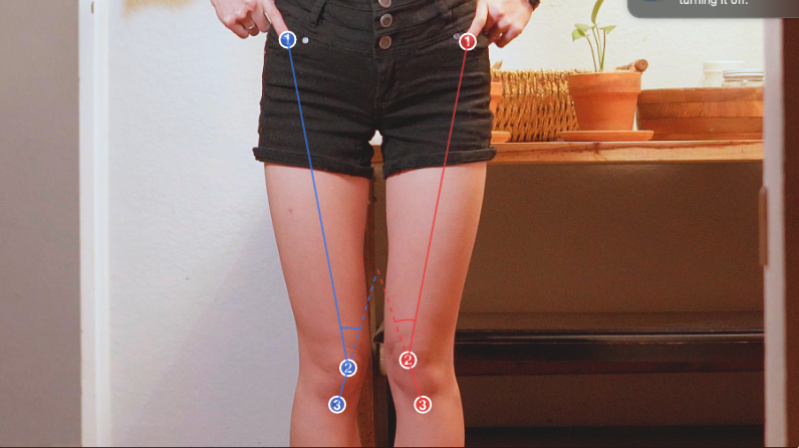
Quick note: the Q-angle stuff is complicated, and it only seems to cause problems when it's thrown off by foot posture specifically—not by hip or lower back issues. There is debate in the literature on whether this is an effective measurement tool for determining how the knee is tracking. I'll go deeper on this in a future post.
The big takeaway: these were elite athletes in their late teens and early twenties. Not couch potatoes. Not older adults with worn-out joints. The study showed that flat feet create a chain reaction—the foot collapses, the knee gets pulled out of alignment, and pain follows. That's the basic pathway we're talking about when we say foot posture affects the whole lower body.
Study after study shows the same thing: bad foot posture causes problems up the entire leg. One of the biggest and best studies on this is the Framingham Foot Study. It looked at a large group of regular people (not just people who were already hurting) and checked how their foot posture related to pain in different joints.
For knees: people with low arch foot posture had 57% higher odds of knee pain compared to people with normal arches. That's a big number, and it came from everyday adults—not a hand-picked group.
Foot posture and ankles
That same Framingham Foot Study also looked at ankles. Out of 1,856 people, about 11% had ankle pain. People with flat feet had 47% higher odds of ankle pain compared to those with normal arches. And people with really high arches had it even worse—656% higher odds of ankle pain.
Why? Flat feet cause too much inward rolling, which stresses the ankle and shin over time. High arches do the opposite—the ankle can't move through its full range of motion, so stress gets concentrated in one spot.
Here's the part that really stood out to me: almost half of everyone in the study (50.9%) was dealing with lower body pain somewhere. And a lot of them had pain in more than one spot. About 14% had pain in two areas, and almost 9% had pain in three or more. When foot posture goes wrong, the problems tend to spread.
Now, I want to be honest here because I think it's important: the ankle research isn't as clear-cut as the knee research. A big review of 16 studies on chronic ankle instability looked for links to foot posture and couldn't find a clear answer. Some studies said high arches were the problem, others found nothing.
So the Framingham data showing a link between foot posture and ankle pain is solid at a big-picture level, but the exact why is still being figured out. The ankle is complicated. Things like ligament health, how much your ankle can move, and how you actually move during activity all play a role. It's not just about how your foot looks when standing still.
Foot posture and lower back
The Framingham Foot Study researchers also looked at lower back pain in 1,930 people. This one was interesting. Just looking at someone's foot shape while standing (flat, normal, or high arch) didn't predict back pain at all. But when they looked at how the foot actually moved during walking—specifically, whether it rolled inward too much—that did matter.
Women whose feet pronated (rolled inward) during walking had 51% higher odds of lower back pain. And that held up even after accounting for age, weight, smoking, and depression.
The takeaway: for lower back issues, it's not just about how your foot looks standing still. It's about how your foot moves when you're actually doing things—walking, running, training.
A bigger review of research on lower body alignment and back pain backs this up. Flat feet and low arches were linked to more lower back pain. The idea is that problems at the foot create a domino effect going up: your ankles and knees are off, your hips compensate, your gait changes, and your lower back pays the price.
Bottom line: the chain reaction that starts at your feet doesn't stop at your knees or ankles. It goes all the way up to your lower back.
Great, What Can I Do About It?
These studies are just the tip of the iceberg, but the pattern is obvious: if you care about training longevity, foot posture is something you need to look at. The research shows that low arch foot posture affects everything from your knees to your ankles to your lower back. It's not one joint—it's a domino effect that limits how hard you can train and raises your chances of chronic pain over time.
The good news: unlike genetics or age, foot posture is fixable in a lot of cases. Just like you can fix slouching or forward head posture, you can improve your foot posture too. For a lot of people this is a movement quality issue, not something you're stuck with. I proved this to myself by tracking my own foot posture over time and the improvements were real and measurable and the research on how the body adapts to postural training in the feet backs this up.
In the coming weeks, I'll go deeper on foot posture. Things like how to check yours, what causes it, and why it matters beyond just training. If this was useful, subscribe for more evidence-based content on movement and training smarter for the long run.